


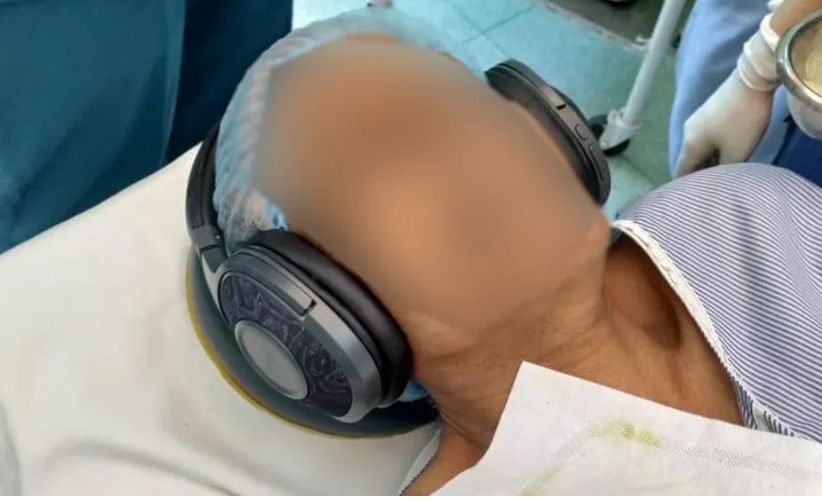
Under the bright lights of an operating theatre in Delhi, a woman lies unconscious as surgeons prepare to remove her gallbladder. She is under general anaesthesia, immobilised and insensate by a combination of drugs designed to block pain, induce deep sleep, and temporarily paralyse her muscles.
Yet, through headphones over her ears, a gentle stream of flute music plays. Even as the anaesthetic silences much of her brain, its auditory pathways remain partly active. When she wakes, she will regain consciousness more quickly and clearly because she required lower doses of anaesthetic drugs such as propofol and opioid painkillers than patients who heard no music.
That is the finding of a new peer-reviewed study from Delhi’s Maulana Azad Medical College and Lok Nayak Hospital, published in the journal Music and Medicine. The research provides some of the strongest evidence yet that music played during general anaesthesia can modestly reduce drug requirements and improve recovery.
The study focused on patients undergoing laparoscopic cholecystectomy, the keyhole operation to remove the gallbladder. These short procedures, usually under an hour, require patients to wake alert, clear-headed, and pain-free. Researchers say music can help achieve this by calming the stress response, which elevates heart rate, blood pressure, and hormones even when a patient is unconscious.
“To do this, patients need to wake up clear-headed and ideally pain-free,” said Dr Farah Husain, senior anaesthesia specialist and certified music therapist for the study. Modern anaesthesia uses a careful mix of drugs to induce sleep, block pain, and relax muscles, sometimes supplemented by regional nerve blocks. Yet the body still reacts to stress from intubation and surgery, making drug management a central concern.
The team designed an 11-month trial involving 56 adults aged 20 to 45. All received the same five-drug anaesthetic regimen, and both groups wore noise-cancelling headphones. Only one group, however, heard calming instrumental music, chosen by patients from soft flute or piano pieces.
The results showed that patients exposed to music required lower doses of propofol and fentanyl. They also had smoother recoveries, better blood pressure control, and lower cortisol levels, a hormone associated with stress. “Since the auditory pathway remains active even when you’re unconscious, music can still shape the brain’s internal state,” said Dr Sonia Wadhawan, director-professor of anaesthesia at Maulana Azad Medical College.
Music therapy has long been used in psychiatry, rehabilitation, and palliative care, but its application during anaesthesia marks a new approach to surgical care. The researchers say the findings highlight that even when the body is still and the mind is asleep, gentle notes can aid recovery, reduce drug use, and humanise the operating room.
The team is now planning further studies on music-aided sedation, exploring how this simple intervention could enhance patient wellbeing across hospitals worldwide.
