


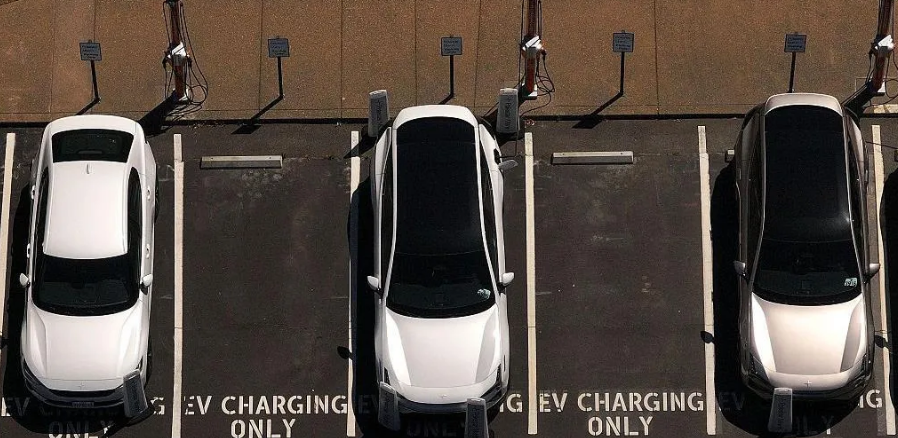
After years of rapid growth, the momentum behind electric vehicles (EVs) in the United States appears to be losing charge as key government incentives expire and economic pressures mount.
Sales of battery-powered cars in the US reached more than 1.2 million last year—over five times higher than in 2019—while hybrid sales tripled over the same period. In August, EVs accounted for a record 10% of all new car sales, according to S&P Global Mobility. Major automakers including Tesla, Ford and General Motors reported record-breaking electric sales in their latest quarterly updates, even as the broader industry grapples with high interest rates and inflation concerns.
However, analysts warn that much of this recent surge was driven by consumers rushing to take advantage of a government subsidy before it expired at the end of September. The $7,500 federal tax credit had helped make electric, plug-in hybrid and fuel cell vehicles more affordable for many buyers. Without it, industry leaders fear a sharp downturn.
“I expect that EV demand is going to drop off pretty precipitously,” said Paul Jacobson, chief financial officer at General Motors. Ford CEO Jim Farley echoed the concern, predicting a “smaller, way smaller” EV market than previously forecast.
The US remains far behind other major markets in electric car adoption. In the UK, nearly 30% of new vehicles sold last year were electric or hybrid, according to the International Energy Agency (IEA). In Europe, the share stands at around 20%, while China—now the global EV leader—saw electric cars make up almost half of all new sales in 2024.
Experts point to weaker US policy support as a key reason. President Joe Biden’s administration had sought to accelerate EV adoption through tax incentives, stricter emissions rules, and billions in investments for charging infrastructure. His goal was for half of all new cars sold in the US to be electric by 2030.
But the political tide is shifting. Former President Donald Trump has rolled back several of those initiatives, calling climate change a “con job” and vowing to eliminate what he describes as “forced” EV mandates. He also introduced tariffs on Chinese-made cars and components this spring, a move supported by both major parties but one that raises costs for manufacturers.
As of August, the average EV sold for more than $57,000—around 16% above the overall average vehicle price, according to Kelley Blue Book. The most affordable model, the Nissan Leaf, starts at about $30,000, while several UK models are priced below £20,000.
Automakers are now recalibrating. Hyundai has announced price cuts for its Ioniq range to offset the loss of the tax credit, while Tesla is increasing lease costs on some models. Analysts say the next year will be a major test for the sector.
“It would have been difficult enough if all you had to deal with was new tariffs,” said Stephanie Brinley of S&P Global Mobility. “But with the incentive going away too, there’s a double impact.”
Despite the headwinds, experts caution against declaring the American EV industry in decline. “It’s too early to say the US is behind,” Brinley added. “We’re still figuring out if electric really is the only answer.”
