


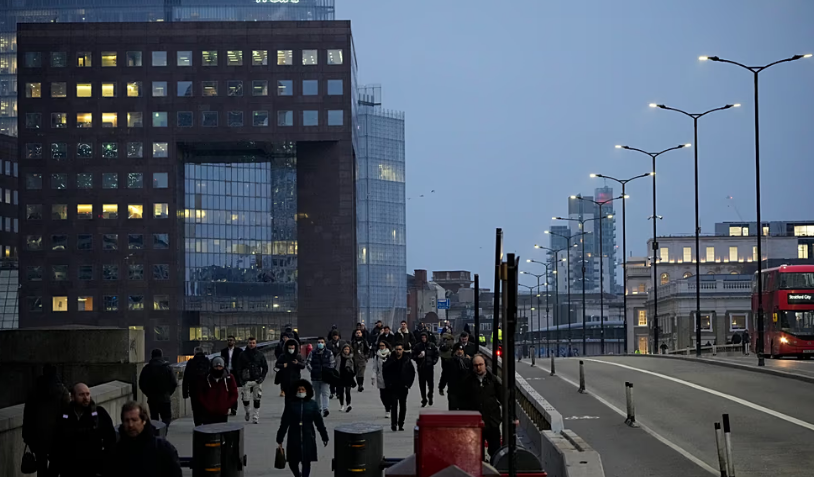
Hybrid working has become a fixture of the UK labour market, but employers are increasingly tightening attendance requirements, with most roles now demanding at least two days a week in the office.
According to the Office for National Statistics (ONS), 28% of employees in Britain worked in hybrid arrangements in the first quarter of 2025, a sharp rise from around 10% in early 2021. Among full-time staff, the share was even higher, reaching 34%. While hybrid work is firmly established, fresh data from hiring platform Indeed shows that flexibility is narrowing as businesses push for more in-office presence.
“Two to three days a week in the office has become the norm in the UK,” said Jack Kennedy, senior economist at Indeed. By August 2025, 85% of hybrid job postings on Indeed specified a minimum of two office days per week, compared with 65% in 2022.
The shift marks a significant change in working patterns over the past three years. Roles requiring just one office day have fallen from 35% in 2022 to 15% in 2025. Meanwhile, two-day requirements rose from 48% to 56%, while three-day expectations jumped from 16% to 25%. Even four-day hybrid models, once rare, now account for 4% of postings, up from 1%.
Accounting for more than half of all hybrid listings, two-day office requirements are the most common pattern. Combined with three-day schedules, these now make up 81% of hybrid jobs in the UK.
Variation by occupation
The level of in-office requirements differs significantly across sectors. Accounting leads the pack, with staff expected to work an average of 2.4 days in the office, followed by human resources (2.3 days) and IT infrastructure and support (2.3 days).
Software development remains the profession with the highest share of hybrid and remote opportunities, with 48% of postings mentioning flexible options. Yet even here, in-office expectations have climbed to an average of 2.3 days, up by 0.6 days since 2023. “The increase in required office days could reflect employers wielding more leverage in a subdued market for tech talent, and/or wanting to promote greater in-person collaboration,” Kennedy noted.
At the other end of the scale, social sciences and architecture roles require fewer in-office commitments, averaging 1.6 days per week.
Remote work in context
Overall, 15% of UK job postings on Indeed continue to mention hybrid or remote work, close to record highs. This figure differs from ONS data, which tracks the actual workforce, while Indeed’s analysis is based on advertised vacancies.
Globally, the UK stands out for its relatively high levels of flexibility. The Global Survey of Working Arrangements (G-SWA) ranks the country first among 18 European nations for remote working, with employees averaging 1.8 home-based days a week. Worldwide, the UK comes second out of 40 countries.
“Several years after the pandemic-driven shift to remote work, hybrid arrangements remain in flux,” Kennedy said. “With softer labour market conditions, many employers appear to be pressing for greater on-site attendance.”
