


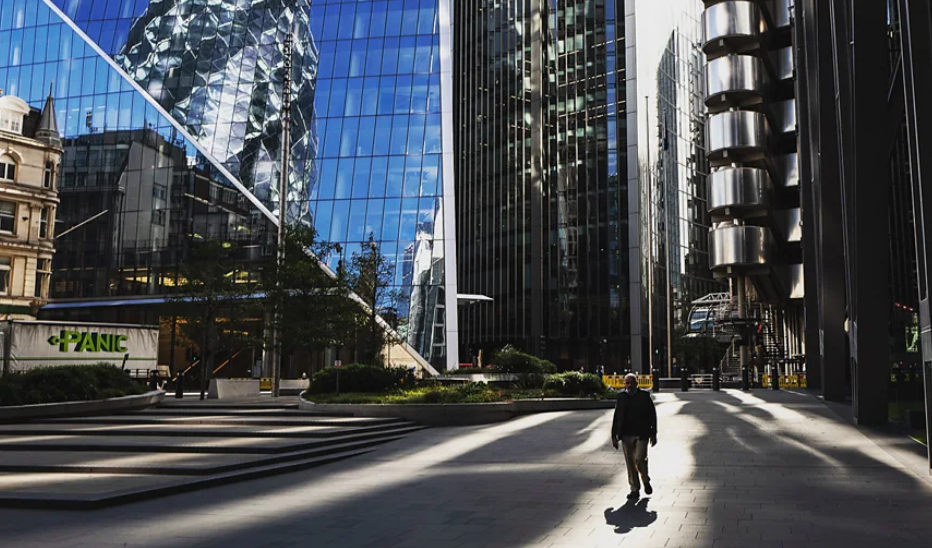
In September 2020, as Covid-19 cases surged across the UK, London’s bustling financial district was transformed into a ghost town. Once-crowded streets in the City of London stood empty as the government imposed tighter restrictions to curb the spread of the virus, marking a stark contrast to the energy and bustle that normally define the capital’s economic centre.
Hopes that the pandemic would ease with the end of summer quickly faded as infection rates began climbing again in late August. Just weeks earlier, the government’s “Eat Out to Help Out” scheme had encouraged people back into pubs and restaurants, offering subsidised meals throughout August. The programme boosted footfall in participating venues by more than 50% compared with the previous year, but critics later argued it also gave the virus fresh momentum.
As universities reopened and students returned to campuses, cases accelerated further. On 21 September, the government’s chief scientific adviser, Sir Patrick Vallance, issued a stark warning: daily infections could reach 50,000 if urgent measures were not taken. The following day, Prime Minister Boris Johnson announced a new set of restrictions, ushering in another period of disruption for businesses and communities across the country.
For photographer Andy Hall, the deserted streets of London’s financial hub became an unexpected canvas. Having spent years documenting the City’s blend of historic facades and modern skyscrapers, Hall was already familiar with its rhythms. But the emptiness of lockdown gave the landscape an entirely new character.
“When Covid broke, it was a perfect opportunity to show a slice of the City of London in a completely new and weird guise,” Hall recalled. “Because of its landscape and architecture, it made for even more amazing pictures. You had these pools of light bouncing off glass towers, but no people to fill the space.”
Hall’s photographs, taken through the long summer of 2020 and into September, capture isolated figures dwarfed by towering buildings, as well as streets like Leadenhall Street — normally bustling with lunchtime crowds — left entirely deserted. He described the scene as an “eerie urban desert,” a surreal emptiness in a place designed for movement and exchange.
The images serve as a reminder of the human and economic cost of the pandemic, particularly for city centres that rely on office workers, commuters and tourism. While the restrictions were necessary to slow the virus’s spread, they also stripped London’s financial district of its vitality, leaving behind only its architecture and silence.
For Hall, the experience was as unsettling as it was visually striking. “I’d photographed the City before, but suddenly you’re walking around this eerie place,” he said. “It was the same backdrop, but the life that usually animated it had completely vanished.”
