


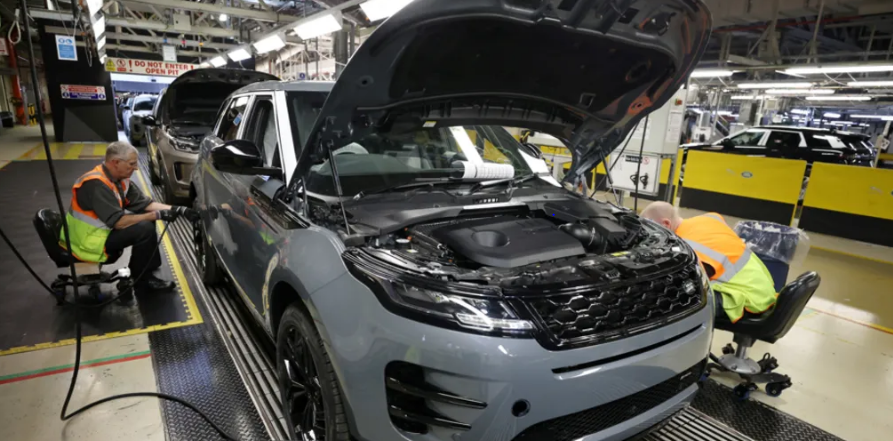
Jaguar Land Rover (JLR) has told suppliers that production at its factories will remain suspended until at least 24 September, more than three weeks after a major cyber attack forced the company to shut down operations. Industry sources, however, warn that the disruption could last well into November, raising alarm across the carmaker’s supply chain.
The attack, which struck on 1 September, paralysed JLR’s IT networks and brought production lines to a standstill across its UK plants in Solihull, Halewood, and Wolverhampton, as well as facilities in Slovakia, China, and India. A criminal investigation is under way, and the company has acknowledged that some data may have been accessed or stolen by third parties.
In a statement announcing the latest delay, JLR said: “We have taken this decision as our forensic investigation of the cyber incident continues and as we consider the different stages of the controlled restart of our global operations, which will take time. We are very sorry for the continued disruption this incident is causing and we will continue to update as the investigation progresses.”
While JLR has dismissed speculation that disruption could drag on for months, the shutdown is already proving costly. The carmaker, owned by India’s Tata Motors, is estimated to be losing at least £50 million a week in halted production, with more than 1,000 cars typically rolling off its assembly lines each day. By 24 September, the company will have lost three and a half weeks of output, and experts caution that even once production resumes, returning to full capacity could take weeks.
The consequences are being felt most sharply among suppliers. Many of the companies feeding parts into JLR’s global network are small or medium-sized businesses, and several have warned they do not have the financial resilience to withstand an extended shutdown. Without urgent support, industry insiders say bankruptcies are likely.
Jason Richards, West Midlands regional officer at Unite the union, said the crisis is already sparking difficult conversations about jobs. “We’re already seeing employers having discussions on potential redundancies,” he said. “People have to pay rent, they have to pay mortgages, and if they’re not getting any pay, what are they supposed to do?”
Richards warned that if JLR expects suppliers to quickly resume deliveries once production restarts, they may be disappointed. “We need to have a supply chain into Jaguar Land Rover. I can’t emphasise it enough because if they turn the tap on and they’re expecting the supply chain to be waiting on the subs bench, they won’t be there,” he added.
The cyber attack has highlighted the vulnerability of one of Britain’s largest car manufacturers at a time when the industry is under pressure from slowing global demand, high costs, and the transition to electric vehicles. For JLR and its network of suppliers, the race is now on to restart operations before the financial strain deepens.
