


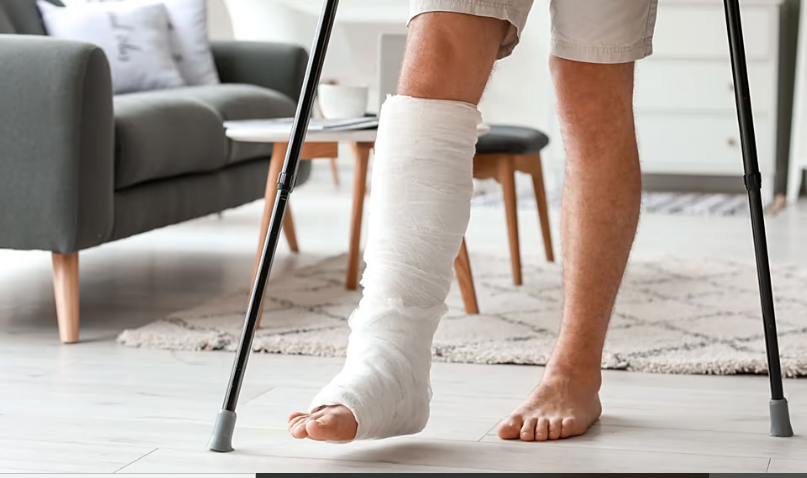
A once-rare surgical procedure, originally developed to correct serious deformities, is increasingly being sought after by adults—particularly men—wishing to boost their height for cosmetic reasons. The UK’s National Health Service (NHS) has warned that the trend carries serious risks, including the possibility of permanent disability.
Leg-lengthening surgery, first pioneered in the 1950s by Soviet surgeon Gavriil Abramovich Ilizarov, was designed to treat patients with one leg shorter than the other or those recovering from traumatic injuries. Today, however, it is being marketed worldwide as a luxury option for individuals hoping to gain a few extra centimetres and, in some cases, greater self-confidence.
The procedure involves an osteotomy, in which surgeons break the leg bone and insert a device that slowly separates the two sections. Patients must adjust screws or dials several times a day, gradually pulling the bone apart so that new tissue grows to fill the gap. The process can take months, with successful outcomes often resulting in an increase of 5–8 centimetres in height.
But recovery is notoriously long and painful. Patients typically spend weeks immobilised and require intensive physiotherapy to rebuild muscle strength and relearn how to walk. Complications are also common. A study published in the Journal of Orthopaedic Surgery and Research found that up to 45% of patients reported problems such as infections, nerve damage, joint stiffness, or difficulties in bone healing.
Professor Tim Briggs, NHS England’s national director for clinical improvement and elective recovery, urged caution, particularly for those considering the operation for purely cosmetic reasons.
“Leg lengthening surgery is not a quick fix – it is a serious, invasive procedure that can be beneficial for patients when there is a genuine clinical need but carries significant risks,” Briggs told The Telegraph. “Anyone considering this surgery abroad should think very carefully about the long recovery and the risks, and I would urge against it unless well informed about where they are seeking treatment.”
Despite the warnings, demand for the procedure is rising sharply. Analysts estimate that the global limb-lengthening industry, valued at about $4 billion (€3.3 billion) in 2021, could reach $8.6 billion by 2030.
The cost of treatment varies significantly by country. In the UK, private clinics charge upwards of £50,000 (€57,000), with some procedures costing as much as £240,000. Turkey, which has positioned itself as a hub for medical tourism, offers the surgery for as little as €28,000, drawing patients from across Europe and beyond.
As demand grows, health experts caution that patients considering the operation for cosmetic purposes may underestimate both the physical toll and the medical dangers, underscoring that leg lengthening remains far from a simple or risk-free solution.
