


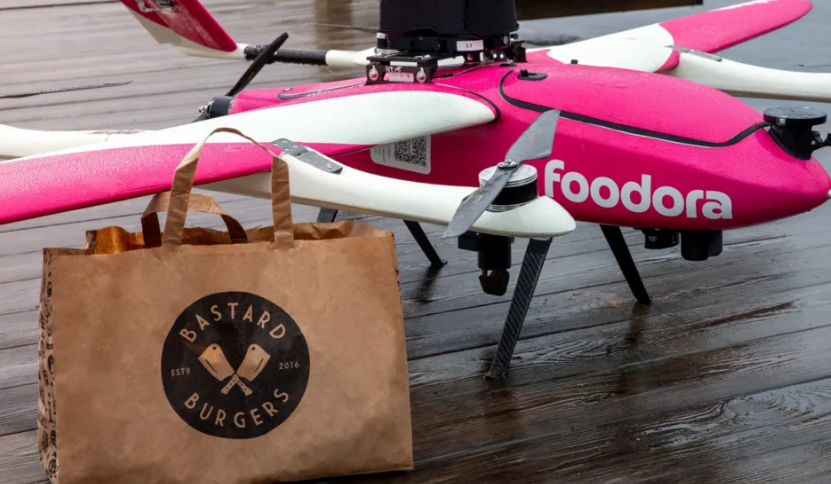
Residents of Sweden’s Värmdö island, just outside Stockholm, are getting a taste of a new future in food delivery—by drone. Norwegian start-up Aviant has launched what it says is Scandinavia’s first hot meal drone delivery service, aimed at bridging the gap between urban convenience and rural living.
Värmdö, home to around 46,000 people year-round and double that in summer, has long lacked reliable food delivery options despite its proximity to the capital. Since February, locals in Gustavsberg and surrounding areas have been able to order freshly cooked burgers from the Scandinavian chain Bastard Burgers, with drones delivering directly to their doors.
The initiative addresses a broader challenge across Scandinavia, where many communities—spread across thousands of islands, peninsulas, and sparsely connected regions—have little or no access to traditional delivery services. “There are 87,000 people around Stockholm who don’t have access to home delivery,” Aviant co-founder and CEO Lars Erik Fagernæs told reporters. “These are suburbs or semi-rural areas where people want takeaway food but simply don’t have the option.”
The drones, which can fly up to six miles with a maximum delivery time of ten minutes, use insulated containers to keep food hot and fresh. “We tested this for three years. In the beginning there were a lot of soggy fries,” Fagernæs admitted. “But now we’ve perfected the system. Even in winter, the food arrives warm.”
Aviant is currently operating in a “beta phase,” completing about ten deliveries a week, but plans to scale up significantly. A second pilot program will launch in Nesodden, a peninsula near Oslo where a short flight replaces what would otherwise be a 29-mile drive.
The company has identified around 40 potential bases for expansion across Scandinavia and is exploring similar opportunities in Canada and the northeastern United States, regions that also combine islands, lakes, and remote communities.
Drone delivery has been tested globally in recent years, with mixed commercial success. UK firm Skyports has run trials in the Orkney Islands, while German company Wingcopter and operators in China have experimented with rural deliveries. Most efforts, however, have relied on government or corporate backing to remain viable.
Fagernæs acknowledges that high winds and severe weather will sometimes ground Aviant’s drones, but expects a 90% operational rate. For now, the focus is on proving that small-scale services can work. “People go crazy for it,” he said. “They call their neighbors and their grandma—it’s like a UFO delivering their food.”
If successful, Aviant’s model could provide a blueprint for drone delivery in regions where geography makes traditional methods costly or impractical.
