


New Delhi is scrambling to shield its economy after steep US tariffs on Indian goods took effect this week, threatening to dent exports and growth in the world’s fifth-largest economy.
The 50% tariffs, imposed by US President Donald Trump, follow an additional 25% penalty announced earlier this month on India’s purchases of Russian oil and weapons. The move has pushed India—once among Washington’s closest Indo-Pacific partners—into the ranks of the world’s most heavily penalized trading nations.
With the United States recently serving as India’s largest export destination, the restrictions are expected to hit industries ranging from textiles and gems to seafood, all of which depend heavily on American consumers. Analysts warn the new duties could disrupt millions of jobs linked to India’s export-driven sectors.
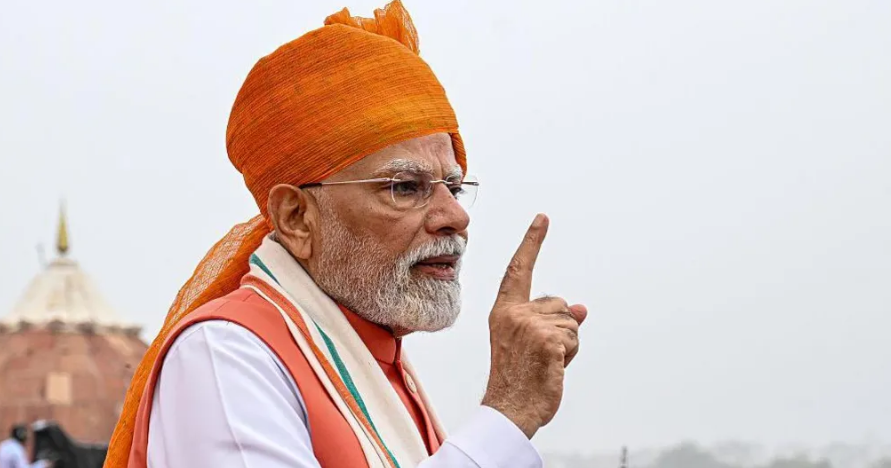
Prime Minister Narendra Modi has sought to soften the impact with a package of tax cuts and fiscal incentives aimed at boosting domestic consumption. Addressing crowds at Independence Day celebrations earlier this month, Modi pledged a “Diwali gift” for households and small businesses, promising what he called a “massive tax bonanza.”
“We should become self-reliant—not out of desperation, but out of pride,” Modi said from the ramparts of Delhi’s Red Fort, urging shopkeepers to display “Swadeshi” or “Made in India” signs. He has repeated the call for self-reliance several times in recent days.
At the heart of his economic response is a plan to overhaul India’s goods and services tax (GST), which replaced a patchwork of levies eight years ago but has since been criticized for its complexity. The government has proposed a simplified two-tier GST structure, which, combined with earlier income tax cuts worth $12 billion, could deliver what analysts estimate to be a $20 billion boost to consumption.
Private consumption accounts for nearly 60% of India’s GDP, but urban demand has slowed in the wake of job cuts in sectors such as IT. Economists at Morgan Stanley argue that tax relief could lift spending, drive growth, and ease inflationary pressures. UBS analysts add that GST cuts, by lowering prices at the point of purchase, could have a stronger multiplier effect than past corporate tax breaks.
India’s stock markets have welcomed the announcements, and rating agency S&P Global recently upgraded India’s sovereign rating for the first time in 18 years, potentially reducing borrowing costs and attracting investment.
Still, the broader picture remains fraught. Trade talks with Washington have been suspended, and tensions over India’s energy ties with Moscow continue to escalate. For now, Trump’s tariffs amount to what experts describe as a de facto sanction on trade between two of the world’s most important economies—a scenario that would have seemed unlikely only months ago.
