


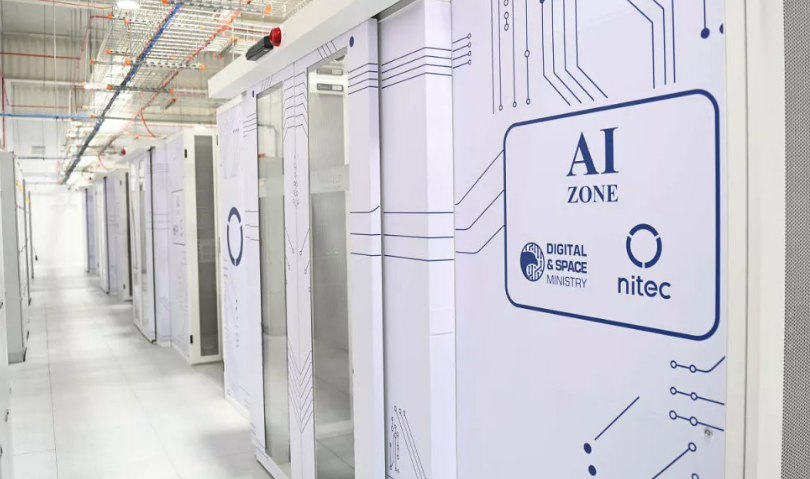
Kazakhstan has unveiled the most powerful supercomputer in Central Asia, marking a major milestone in its ambitious drive to become a regional leader in artificial intelligence and digital innovation. The launch, held at the Alem.cloud supercomputing centre in Astana, comes as the government seeks to enhance national sovereignty through technological self-reliance.
The supercomputer, capable of performing up to 2 exaflops — two quintillion calculations per second — will serve dual purposes: supporting Kazakhstan’s expanding e-government infrastructure and advancing AI development. President Kassym-Jomart Tokayev, who has personally championed AI as a strategic national priority, activated the system during the inauguration ceremony.
“This is a vital step in digitalising key sectors of the economy and science,” Tokayev said. “It paves the way for innovation and improved services in citizens’ daily lives.”
Kazakhstan began its e-government journey in 2004 and has since digitalised 92% of public services. Eight million citizens now use digital signatures, and the country ranks 24th globally in the 2024 UN E-Government Development Index. However, the government’s long-term focus lies in AI. Earlier this year, a draft AI law was passed, and a dedicated Committee on AI was established.
The new supercomputer is also at the heart of efforts to develop a Kazakh-language AI model known as AlemLLM, seen as essential to preserving linguistic identity in the digital age. “We need computing power not only to develop KazLLM but to support future AI tools that use text, sound, and image simultaneously,” said Waqar Ahmad, President of Nazarbayev University.
Despite the achievement, experts warn that challenges remain. “Such a system demands constant updates and skilled specialists. But we’re losing talent — especially in IT — to brain drain,” said Boris Potapchuk, a senior data centre expert at Nazarbayev University. He cautioned that the supercomputer may initially focus more on applying existing AI models rather than developing new ones.
Potapchuk added that only local experts will be allowed to maintain the system due to the sensitive nature of the data it will handle, which includes personal citizen information and government records. This limitation, however, also reinforces the need to train a new generation of highly qualified domestic specialists.
The project has already demonstrated early applications, including wildfire detection systems, AI in healthcare, and smart construction tools. But the Kazakh-language model remains a central pillar of the strategy to safeguard the country’s digital independence.
Digital Development Minister Zhaslan Madiyev emphasized the broader significance of the initiative. “Digital capacity is now as critical to sovereignty as energy or food security,” he said. “With this supercomputer, we are laying the foundation for a competitive AI ecosystem on a global scale.”
As Kazakhstan positions itself in the global tech race, officials acknowledge this is only the first step in a long journey — but a vital one toward establishing a secure, sovereign digital future.
