


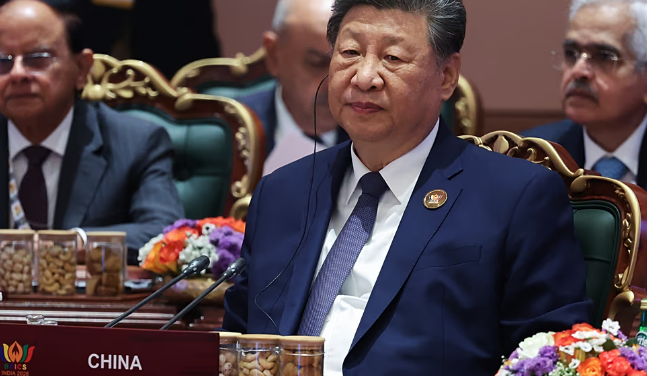
China will lead efforts to establish an open-source artificial intelligence zone for BRICS countries, President Xi Jinping said on Sunday as leaders of the 11-member group met for a summit in New Delhi.
Xi presented the proposal as part of a broader Chinese initiative aimed at promoting open and inclusive development of artificial intelligence. The plan would support cooperation among BRICS members in developing and applying large language models, while also creating specialised AI research and training programmes.
According to a readout of Xi’s speech released by Chinese state broadcaster CCTV, the initiative is intended to help build an open ecosystem for artificial intelligence.
Open-source AI models make their underlying code available to users, allowing developers and organisations to study, modify and adapt the technology for different applications. Chinese technology companies have increasingly developed prominent open-source models, while many leading US AI companies have generally pursued closed or restricted approaches to their most advanced systems.
Xi said China would work with BRICS partners to strengthen cooperation in AI development and applications. The proposal comes as governments around the world seek greater influence over the rules governing rapidly advancing AI technologies.
The Chinese president also called for the creation of a broad, consensus-based global framework for AI governance. His remarks reflect Beijing’s push for greater international participation in establishing standards for artificial intelligence as the technology becomes increasingly important to economies and national security.
The BRICS group was established in 2009 as a forum for major emerging economies seeking greater influence in international institutions traditionally dominated by Western powers. The group initially consisted of Brazil, Russia, India and China, with South Africa joining later. Its membership has since expanded to include additional countries.
AI has emerged as an increasingly important area of competition between China and the United States. Both countries are investing heavily in computing infrastructure, research and advanced AI systems, while also debating how the technology should be regulated.
Xi is expected to travel to the United States later this month for talks with President Donald Trump. Artificial intelligence governance could feature in those discussions as concerns increase over the pace of development and the potential risks associated with increasingly powerful AI systems.
The proposal for an open-source AI zone could also strengthen technological cooperation among BRICS members by giving researchers and developers greater access to shared models and expertise.
China’s push comes at a time when countries are competing not only to develop advanced AI systems but also to shape the international rules governing their use. Xi’s call for an open ecosystem signals Beijing’s intention to play a central role in that emerging global framework.
