


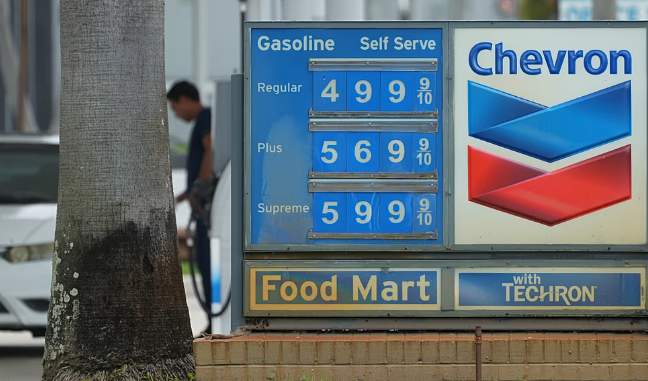
Chevron is expected to announce an expansion of its operations in Venezuela as Washington moves to secure greater control over the country’s oil resources and encourage new investment in its energy sector.
The announcement is expected to come alongside US Energy Secretary Chris Wright, who arrived in Caracas late Tuesday after Venezuela’s National Assembly approved an agreement involving a portion of the country’s oil reserves.
The planned expansion would mark a significant new step for Chevron, the only major US oil producer to have maintained operations in Venezuela since the nationalisation of the country’s oil industry under former President Hugo Chávez. The policy pushed companies including ExxonMobil and ConocoPhillips out of the country.
A US official said Chevron executives would join Wright for the announcement and unveil fresh investment plans. The move would be the first major corporate action following approval of the agreement by Venezuelan lawmakers.
US Secretary of State Marco Rubio described the arrangement as an agreement involving the US government and a special account that would allow Washington to take control of part of the assets. He said US support could help attract private investment required to restore production at the fields.
The agreement involves 17 oil fields holding an estimated 65 billion barrels of reserves. North American Blue Energy Partners has rights to the fields for 100 years. Under the proposed structure, a new company would be formed with a 35 per cent stake held by the US Department of War’s Office of Strategic Capital.
The US State Department would also have the right to purchase 20 per cent of production at cost. American citizens would make up a majority of the company’s board, while Washington would retain veto power over appointments.
The agreement has already generated political debate in Venezuela. Lawmakers approved it by a show of hands, although some opposition members abstained, saying they had not been given access to the full terms.
Opposition lawmaker Luis Emilio Rondón called for greater transparency, arguing that lawmakers needed to understand the details before supporting the deal. National Assembly leader Jorge Rodríguez defended the agreement, questioning the value of leaving Venezuela’s oil underground.
The involvement of Alejandro Betancourt, owner of North American Blue Energy Partners, has also attracted attention. Betancourt has faced investigations in Spain and Switzerland over allegations including money laundering, although no charges have been filed. He has also faced accusations linked to alleged corruption involving Venezuela’s state oil company PDVSA.
Questions remain over how quickly the agreement can increase production. Analysts estimate that bringing new Venezuelan oil to international markets could take anywhere from one to 10 years.
US officials say Washington will not directly finance the project, arguing that its political backing will help attract private capital.
President Donald Trump has suggested other major US oil companies could enter Venezuela, although ExxonMobil said Tuesday that its position had not changed. CEO Darren Woods previously described Venezuela as an unattractive investment environment.
For Washington, increased Venezuelan production could also support efforts to reduce fuel costs as energy prices rise following US strikes on Iranian targets near the Strait of Hormuz.
Lower petrol prices are a political priority for the Trump administration ahead of November’s midterm elections, when Republicans are defending their control of Congress.
