


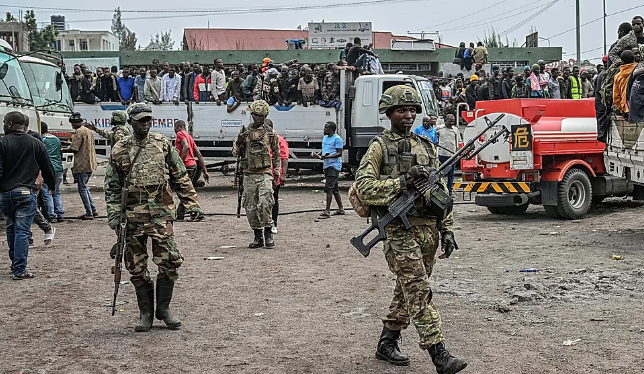
The Democratic Republic of Congo and the Rwanda-backed M23 armed group have agreed on a roadmap aimed at advancing peace negotiations and addressing the long-running conflict in the mineral-rich eastern part of the country.
The agreement was announced in a joint statement on Sunday following five days of closed-door discussions in Switzerland. The talks, held from August 17 to 21, brought together representatives from the Democratic Republic of Congo and M23, along with officials from the United States, Qatar, Switzerland, the African Union Commission and Togo.
The participants agreed to a series of steps and timelines for negotiations under the Doha Framework Agreement, which was signed by the two sides in Qatar last year.
The agreement said the parties would maintain flexibility during the process while working toward a broader settlement to the conflict.
“The Parties developed a roadmap setting out sequenced steps and timelines for negotiations under the Doha Framework Agreement,” the statement said.
The latest development comes despite continued fighting in eastern Congo since the signing of the Doha agreement. M23 has captured significant areas of territory in North and South Kivu provinces, forcing large numbers of civilians from their homes.
The conflict has involved several armed groups competing for control of territory and valuable mineral resources. Eastern Congo contains deposits of minerals that are important to the global technology and manufacturing industries.
M23 has repeatedly denied allegations that it operates as a proxy for Rwanda, while Congo and several international observers have accused Kigali of providing support to the group. Rwanda has rejected accusations that it directly controls the movement.
As part of the latest discussions, both sides agreed on a standard system for reporting alleged violations of the ceasefire. The first ceasefire verification mission is scheduled to take place in Minembwe, in South Kivu province, on Monday.
The parties also agreed to establish a mechanism to monitor progress and address difficulties in carrying out commitments under the Doha Framework Agreement.
The new roadmap is intended to give the peace process a clearer structure after months of continued violence. Previous diplomatic efforts have struggled to halt fighting and establish lasting security in the region.
The talks were supported by several international and regional actors, with Switzerland hosting the latest negotiations and Qatar continuing its role in the Doha peace process. Togo participated as a mediator for the African Union.
The agreement marks a renewed diplomatic effort, although significant challenges remain. The success of the roadmap will depend on whether the parties can maintain the ceasefire, follow the agreed timelines and address disputes over territory, security and the implementation of previous commitments.
