


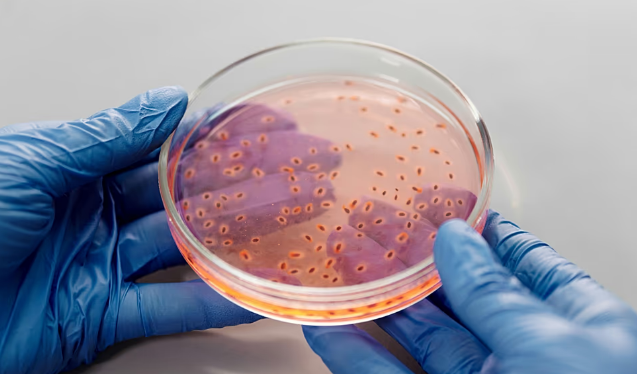
Scientists have discovered that some viruses that attack bacteria can deliberately generate genetic variation among their offspring, helping them overcome bacterial defences and potentially opening a new path for treating drug-resistant infections.
The viruses, known as bacteriophages or phages, infect and destroy bacteria without attacking human cells. They attach themselves to bacterial cells, inject their genetic material and take control of the cells’ machinery to produce new viruses. The infected bacteria eventually burst, releasing the new phages.
However, bacteria can develop resistance to phages, creating a challenge similar to the resistance that makes some bacterial infections difficult to treat with antibiotics.
A study published in Nature Microbiology found that certain phages can respond by rapidly changing parts of their genetic material. Researchers from Michigan State University identified regions of phage genomes that function as genetic “hotspots”, allowing important genes to mutate repeatedly during viral reproduction.
The researchers studied bacteriophage T2, which infects E. coli, and examined how it responded to a bacterial defence mechanism designed to recognise and destroy invading viral DNA.
The bacterial protection initially appeared effective, but within hours the phages began overcoming it.
When the scientists analysed the resistant viruses, they discovered repeated mutations in a gene called agt. The mutations were concentrated in a repetitive section of DNA.
The region was identified as a contingency locus, an area where DNA-copying processes can make frequent mistakes. These changes can add or remove repeated genetic sequences, altering how the gene’s instructions are interpreted.
As a result, a population of phages can contain several genetic versions at the same time. Some may be vulnerable to bacterial defences, while others may survive and continue infecting the bacteria.
Researchers found that these repetitive regions accumulated mutations thousands of times faster than other parts of the phage genome.
The team also identified similar genetic regions in bacteriophage T4, another virus that infects E. coli. Simple repeated DNA sequences were found across a wide range of E. coli phages, although their frequency varied between genes.
The discovery could be important as antimicrobial resistance continues to reduce the effectiveness of some antibiotics. Phage therapy has attracted renewed attention because individual phages can target specific bacterial species or strains, potentially leaving beneficial bacteria less affected.
That precision, however, also creates a weakness because bacteria can develop resistance against individual phages.
The new findings suggest that understanding how phages naturally generate genetic diversity could help scientists design treatments that remain effective as bacteria evolve.
Chris Waters of Michigan State University said the research changes the understanding of how phages evolve, showing that they can produce diverse offspring rather than simply making identical copies.
Researchers cautioned that the findings do not immediately translate into a new treatment. More work will be needed to determine whether these evolutionary mechanisms can safely and effectively be used in phage therapies against antibiotic-resistant infections.
