


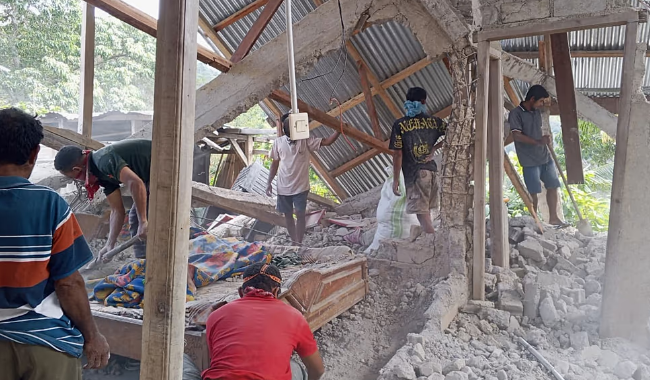
A powerful 7.7-magnitude earthquake struck eastern Indonesia on Saturday, killing at least 38 people and sending residents fleeing into the streets as buildings were damaged and authorities temporarily issued a tsunami warning.
The earthquake struck north of Flores Island in the early hours of the morning, affecting several areas across the eastern part of the Southeast Asian country.
Indonesia’s Meteorology, Climatology and Geophysical Agency (BMKG) later lifted the tsunami warning after monitoring showed no continuing significant rise in sea levels that could pose a threat to coastal communities.
Despite the warning being cancelled, officials cautioned residents to remain alert because aftershocks were continuing.
Nelly Florida Riama, deputy director for geophysics at BMKG, urged people not to return to unsafe buildings and to follow official information.
“Aftershocks are still occurring,” she said, while advising residents to remain calm and avoid spreading unverified information.
National Agency for Disaster Countermeasure chief Suharyanto said 38 people had been confirmed dead. Two people suffered serious injuries, while 11 others sustained minor injuries. Around 2,000 residents evacuated their homes independently following the earthquake.
The tremor was felt across a wide area, according to disaster authorities. Shaking was reported in Nagekeo, Sikka and West Manggarai regencies in East Nusa Tenggara province.
Residents in parts of neighbouring West Nusa Tenggara also experienced the earthquake, including Bima City and Bima Regency. Tremors were additionally reported in several areas of South Sulawesi, including Jeneponto, the Selayar Islands and Maros.
The earthquake caused widespread panic as people rushed outside for safety amid reports of damaged and collapsing structures.
Emergency services have been working to assess the extent of the destruction and locate people who may be trapped or injured. Rescue operations have been complicated in some areas by damaged infrastructure and difficult terrain.
Officials have urged residents in affected communities to remain cautious, particularly around damaged buildings that could collapse during subsequent tremors.
Indonesia is highly vulnerable to earthquakes because it sits along the Pacific Ring of Fire, a seismically active zone where several tectonic plates meet. The country experiences frequent earthquakes and volcanic eruptions, some of which can generate tsunamis.
The latest disaster has prompted authorities to maintain close monitoring of coastal areas even after the tsunami warning was lifted.
BMKG officials said residents should rely on official updates rather than rumours circulating online or through social media.
The agency is continuing to monitor seismic activity and sea levels as emergency teams assess damage and provide assistance to affected communities. Further aftershocks are possible as the region responds to one of the strongest earthquakes to strike the area in recent years.
