


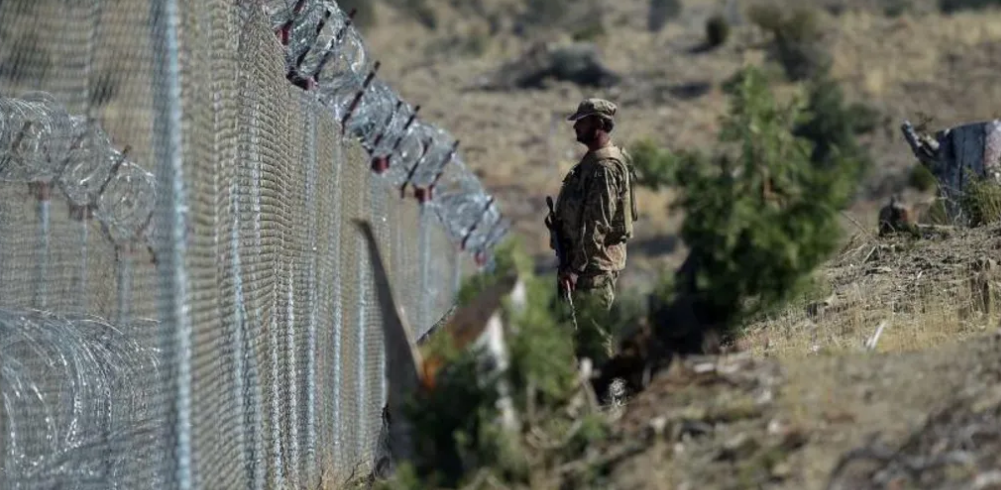
Pakistan launched airstrikes and ground operations in eastern Afghanistan on Sunday, targeting what it described as militant hideouts along the border, while Afghanistan’s Taliban government accused Islamabad of carrying out attacks that killed and wounded civilians.
Pakistan’s Information Minister Attaullah Tarar said the military operation killed 29 militants and was conducted in response to recent attacks carried out by armed groups against civilians inside Pakistan. According to Pakistani officials, the strikes targeted militant positions in the Afghan provinces of Paktia, Paktika and Kunar.
The operation came one day after a deadly assault on the Sindh Rangers headquarters in Karachi, where three members of the paramilitary force were killed. Pakistani authorities said three militants also died during the attack and confirmed the arrest of another suspect, who they identified as an Afghan national.
The militant group Jamaat-ul-Ahrar, a faction that split from the Tehreek-e-Taliban Pakistan (TTP), claimed responsibility for the Karachi attack. Both Jamaat-ul-Ahrar and the TTP are banned in Pakistan and have been designated as terrorist organisations by the United Nations.
Pakistan has repeatedly accused Afghanistan of allowing militant groups to use its territory to plan and launch attacks across the border. The Taliban administration has consistently denied those allegations, insisting that Afghan territory is not being used against neighbouring countries.
Afghanistan’s Taliban government strongly condemned Sunday’s military action, describing it as a “cowardly act” and calling it “a crime and atrocity.” Taliban officials told BBC Pashto that at least 100 people had been killed or injured in the attacks, including civilians, although those figures have not been independently verified.
Taliban authorities said the strikes hit residential areas, with the heaviest casualties reported in Mandikhel village in Paktika province. Pakistan, however, maintained that its forces targeted only militant hideouts and avoided civilian locations.
Relations between the two neighbours have remained tense despite a ceasefire agreed last October after weeks of deadly border clashes. Like previous truce agreements, the ceasefire has gradually broken down as both sides traded accusations over cross-border attacks.
Violence along the frontier has intensified in recent months. Clashes in February left dozens dead, while a Pakistani strike in March reportedly hit a drug rehabilitation centre in Kabul, causing heavy casualties. Earlier this month, Pakistan said it killed 26 militants during another round of airstrikes, while Afghan officials reported that 13 civilians, most of them children, also lost their lives.
The latest military action highlights the continuing security tensions between Pakistan and Afghanistan, with both governments maintaining sharply different accounts of the situation and responsibility for the escalating violence.
