


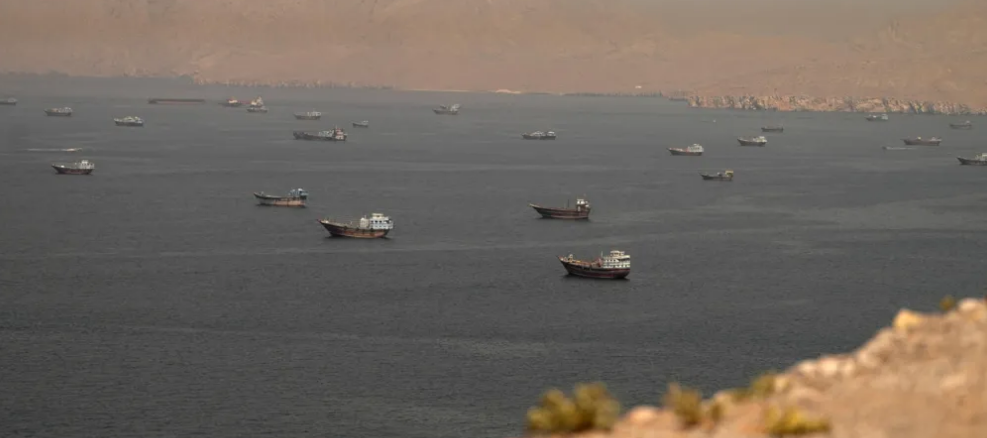
The United States carried out a new wave of military strikes against Iran on Saturday after a drone attack struck a Panama-flagged oil tanker near the Strait of Hormuz, deepening tensions between the two countries and raising fresh concerns over the future of their recently agreed ceasefire.
US Central Command (CENTCOM) said the strikes targeted 10 Iranian military sites in and around the Strait of Hormuz in response to what it described as Iran’s continued attacks on commercial shipping.
According to CENTCOM, the targets included military equipment, communication systems, air defence positions and drone storage facilities. The military said Iran had been given an opportunity to uphold the ceasefire agreement but instead launched a one-way attack drone that hit the MT Kiku tanker.
Iran rejected the US account, accusing Washington of violating the ceasefire first. The Islamic Revolutionary Guard Corps (IRGC) said American forces attacked five Iranian coastal positions under the pretext of responding to naval activity involving the commercial vessel.
In retaliation, the IRGC announced it had launched ballistic missiles and drones at what it described as eight key US-linked military facilities, including Ali Al Salem Air Base in Kuwait and the US Fifth Fleet headquarters in Bahrain. Iranian state media reported that the attacks caused significant damage.
A US official told Reuters there were no reported American casualties or major damage to US military facilities in the region.
Following the exchange, Kuwait and Bahrain activated their air defence systems. Kuwait’s armed forces confirmed they were responding to incoming missile and drone threats, while Bahrain’s Interior Ministry urged residents to remain calm and move to the nearest safe location.
Iran’s Foreign Ministry condemned the US strikes as a serious breach of the ceasefire agreement reached earlier this month, accusing Washington of failing to honour its commitments under the memorandum of understanding signed on June 17.
The IRGC warned that any future attacks, regardless of their scale, would receive what it called a crushing response. Iranian officials also maintained that the country would continue enforcing its authority over navigation through the Strait of Hormuz and deal more forcefully with vessels it considers to be violating its regulations.
US President Donald Trump defended the latest military action, saying on Truth Social that Iran had repeatedly ignored opportunities to respect the ceasefire.
He warned that if Tehran continued its actions, the United States could be forced to “militarily complete the job,” adding that such an outcome would threaten the future of the Islamic Republic.
The latest escalation comes just one day after US forces struck Iranian missile and drone facilities following another attack on the Singapore-flagged cargo ship MV Ever Lovely.
The renewed fighting has cast serious doubt over the ceasefire agreement, which was intended to restore safe navigation through the Strait of Hormuz, one of the world’s most important oil and gas shipping routes. Despite the growing tensions, CENTCOM said commercial vessels continue to transit the strategic waterway.
