


SpaceX has secured investment-grade credit ratings from Moody’s, Fitch and S&P Global, a rare triple endorsement for a newly listed company and a milestone that strengthens its access to cheaper borrowing just days after its record-breaking stock market debut.
The ratings come shortly after the company’s initial public offering, which raised about $85.7 billion and marked the largest IPO in history. Despite the strong credit recognition, SpaceX shares fell sharply on Thursday, extending losses from their post-listing peak.
Moody’s assigned SpaceX a Baa1 long-term issuer rating with a stable outlook, citing what it described as the company’s “exceptional franchise strength” in orbital launch services and its dominance in satellite broadband through Starlink. The agency placed SpaceX slightly above Tesla’s Baa3 rating, prompting Elon Musk to comment on social media that Tesla’s credit rating was “ridiculously low.”
According to Moody’s, Starlink has become the primary driver of cash flow within SpaceX, supporting stronger margins and reducing reliance on traditional launch revenues. However, the agency also highlighted significant risks, including heavy capital requirements linked to the company’s expansion into artificial intelligence infrastructure, continued negative free cash flow and uncertainty over long-term returns.
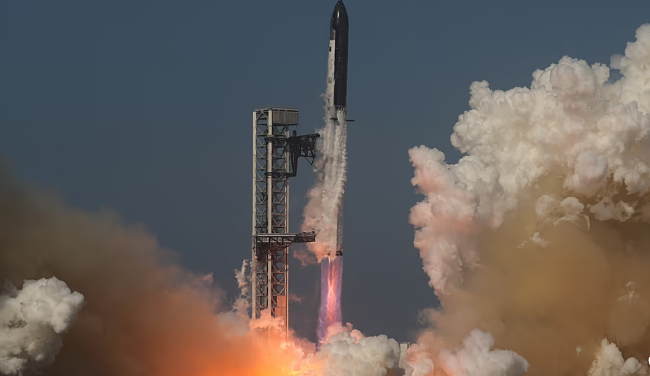
Moody’s pointed to SpaceX’s dependence on its next-generation Starship V3 system, warning that technical setbacks or delays could affect future growth plans. It also flagged governance concerns tied to the company’s ownership structure, noting concentrated control and limited independent board oversight due to Elon Musk’s dominant voting position.
Despite these risks, the agency projected strong revenue and earnings growth through 2028, driven largely by Starlink, which had reached 12 million subscribers as of early June. It also highlighted emerging artificial intelligence partnerships, including compute agreements with Anthropic and Google valued at around $75 billion, as potential long-term growth catalysts.
Fitch Ratings assigned SpaceX a BBB+ rating with a stable outlook, citing its leadership in commercial space launch services, where the company has delivered more than 80% of global payload mass into orbit since 2023. S&P Global followed with a BBB rating, also stable, balancing strengths in launch and connectivity against the high costs and early-stage risks of its AI division.
Despite the positive credit assessments, investor sentiment weakened. SpaceX shares closed at $185 on Thursday, down more than 18% from a recent peak of $225.6 earlier in the week, when the company’s valuation briefly surpassed $3 trillion. Intraday trading saw prices fall as low as $172 before recovering part of the decline.
The pullback shifted SpaceX’s position in global market rankings, moving it down from fourth to sixth among the world’s most valuable companies after briefly overtaking Microsoft and Amazon earlier in the week.
Even with the volatility, SpaceX remains one of the most valuable firms globally in its first week of public trading, with the new credit ratings marking a significant shift in how financial markets assess a company that previously operated as a privately funded aerospace leader.
