


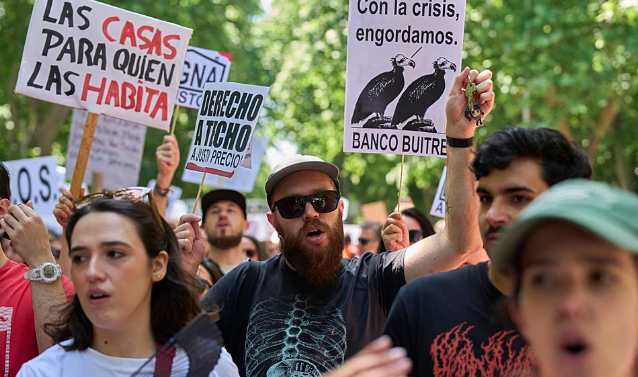
The proportion of income spent on rent in Spain has risen sharply in recent years, underscoring a worsening housing crisis driven by limited supply, rising prices and weak construction output, according to new data from property portal Fotocasa.
The study shows that the average share of wages spent on rent has increased by 12 percentage points since 2019, reaching around 50% in 2025. The findings, based on salary data from job postings on the InfoJobs platform, highlight growing pressure on tenants across the country, particularly in major urban and coastal regions.
The strain is especially visible in Madrid and Catalonia, where renters are estimated to spend up to 70% of their income on housing costs. Other high-burden regions include the Basque Country, the Canary Islands, the Balearic Islands and the Valencian Community, where housing demand continues to outpace supply.
At the other end of the scale, several rural provinces show significantly lower rental pressure. In Jaén, tenants spend around 23% of their income on rent, followed by Teruel at 25% and Cáceres at 27%. Other relatively affordable areas include Ciudad Real, Albacete, Ourense, Badajoz, Córdoba, Palencia and Castellón, where rent typically consumes between 28% and 31% of earnings.
The growing imbalance reflects broader structural problems in Spain’s housing market. Rental prices have risen by roughly 30% since 2022, according to data from the Centro de Investigaciones Sociológicas, while housing construction remains well below historical levels. PwC estimates that Spain has built an average of just 83,000 homes per year since 2010, compared with 315,000 annually between 1970 and 2010.
The shortage of supply is compounded by a limited public housing stock. The Bank of Spain estimates that only 1.5% to 3.3% of Spain’s housing is publicly owned, significantly below the European Union average of 9.3%.
Economists and housing experts warn that affordability is becoming increasingly strained, particularly for younger workers. Funcas, a Spanish think tank, estimates that young people currently spend around 35% of their income on rent, already above the commonly recommended threshold of one-third of earnings.
The figures have also sparked concern within the property sector itself, which has faced criticism from tenant advocacy groups over evictions and the role of large investment funds in the rental market.
Fotocasa data suggests that rental pressure has intensified steadily over time, with the average wage share rising from 38% in 2019 to 50% in 2025. Analysts say the increase reflects both rising rental prices and stagnating wages in many parts of the country.
While regional disparities remain stark, the overall trend points to a deepening affordability crisis across Spain’s housing market. With construction levels still subdued and demand concentrated in urban centres, experts warn that pressure on renters is likely to persist unless supply expands significantly or policy interventions take effect.
