


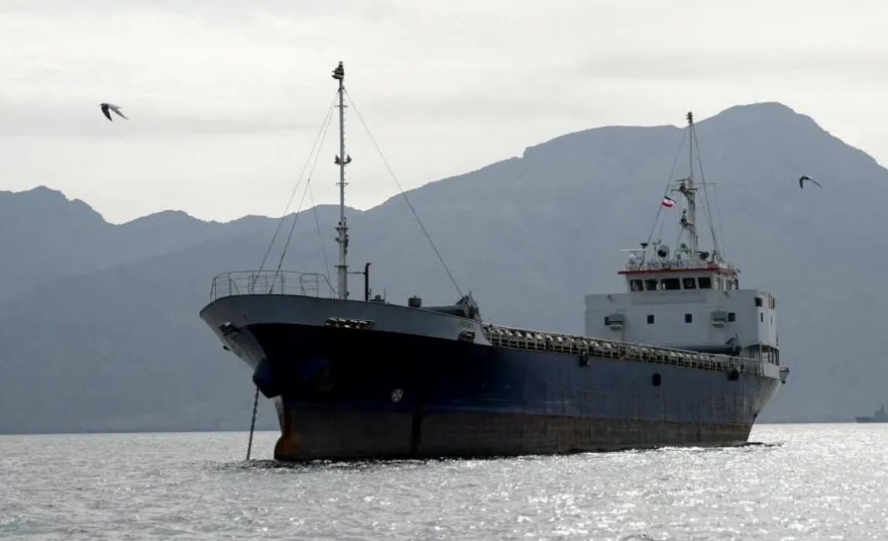
Global oil prices surged past $100 a barrel on Monday after the United States ordered a blockade targeting Iranian maritime traffic, escalating tensions following the breakdown of peace talks between Washington and Tehran.
Brent crude, the international benchmark, rose more than 7% to $102.30 a barrel, while US West Texas Intermediate climbed nearly 9% to $104.94. The sharp increase reversed last week’s decline, when prices briefly fell below $100 after a conditional ceasefire deal raised hopes of easing tensions in the region.
The latest spike follows an announcement by Donald Trump that the US Navy would begin blocking vessels entering or leaving Iranian ports through the Strait of Hormuz. The strait is one of the world’s most important energy corridors, carrying roughly a fifth of global oil shipments.
The US Central Command confirmed that the blockade would begin Monday, targeting all vessels linked to Iranian ports while allowing passage for ships travelling to and from non-Iranian destinations. The move comes after weeks of disruption to shipping routes since conflict escalated between Iran, the United States, and Israel.
Iran has strongly rejected the measures, calling them unlawful and describing them as an act of “piracy.” Iranian military officials warned that they would implement new mechanisms to control the waterway in response to US actions.
At the same time, shipping data suggests that while disruption has intensified, Iranian exports have not completely stopped. Maritime intelligence firm Windward reported that more than 58 million barrels of oil have left Kharg Island since early March, with most shipments reportedly heading to China.
Beijing has urged restraint, warning that the stability of the strait is vital for global trade. Analysts say the situation is likely to keep markets volatile, with energy prices sensitive to any further escalation or signs of diplomatic progress.
Economists also warn that the impact extends beyond oil. The strait is a major corridor not only for hydrocarbons but also for key industrial materials, including aluminium, helium, and components used in fertiliser and polymer production.
Financial markets reacted quickly to the developments. European stock indexes opened lower, with London’s FTSE 100, Germany’s DAX, and France’s CAC 40 all posting declines. Asian markets also closed in negative territory, reflecting broader investor concern over supply disruptions and inflation risks.
Analysts say the outlook now depends heavily on whether the ceasefire can hold and whether diplomatic talks resume. Some expect oil prices to remain elevated until shipping through the Strait of Hormuz stabilises, while others warn that a prolonged blockade could push prices significantly higher.
With global supply chains under strain and energy markets on edge, attention is now focused on whether the fragile ceasefire can prevent further escalation in the weeks ahead.
