


European policymakers, health experts and industry leaders are set to examine the future of the continent’s health security at the upcoming Euronews Health Summit on March 17, where discussions will focus on whether the European Union can maintain its position as a global health leader amid rising challenges.
The debate comes at a time when Europe’s health systems and pharmaceutical supply chains are facing increasing pressure from geopolitical tensions and economic shifts.
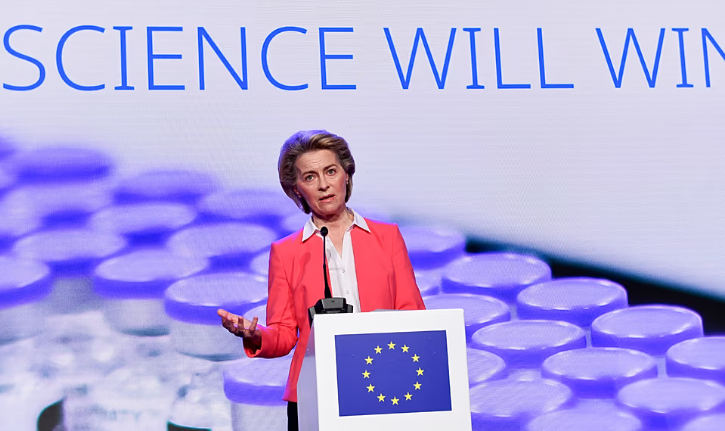
Earlier this year, Ursula von der Leyen, president of the European Commission, highlighted the importance of strengthening health security during remarks to ambassadors in Brussels. Her comments reflected growing concern that recent global developments could affect the EU’s ability to secure medicines, maintain research leadership and protect public health.
Events such as the COVID-19 pandemic and the Russia–Ukraine War exposed vulnerabilities in supply chains and medical infrastructure across the region. At the same time, changing political dynamics among international partners, including developments in the United States, have added uncertainty to the global health landscape.
European health systems have also faced ongoing shortages of medicines and healthcare workers, while an ageing population continues to increase demand for medical services. Supply disruptions, potential tariff pressures and concerns about skilled professionals leaving the region have added to the strain.
The pharmaceutical and biotechnology industries remain a major part of Europe’s economic strength. According to the European Federation of Pharmaceutical Industries and Associations, the sector contributes significantly to the EU’s trade balance. Without pharmaceutical exports, analysts estimate that the European Union’s trade surplus could shift from about €147 billion to a deficit of roughly €47 billion.
The industry also invests heavily in research. Pharmaceutical companies operating in Europe spend around €55 billion each year on research and development and generate exports worth roughly €320 billion, making the sector the largest contributor to the EU’s trade surplus.
Despite this strong foundation, some studies suggest Europe is losing momentum in global research competition. Over the past two decades, the region’s share of worldwide research investment in pharmaceuticals has declined by about 25 percent. Between 2010 and 2022, research spending in the EU pharmaceutical sector grew by about 4.4 percent annually, compared with higher growth rates in the United States and significantly faster expansion in China.
Concerns about competitiveness were also highlighted in a policy study led by Mario Draghi, which identified pharmaceuticals and biotechnology among key strategic sectors where Europe needs stronger investment.
In response, the European Union has introduced several initiatives designed to strengthen the sector and improve supply security. These include the proposed EU Biotech Act, aimed at accelerating the development and commercialisation of biotechnology products.
The EU is also updating its pharmaceutical legislation for the first time in two decades to encourage companies to manufacture and launch new medicines within Europe. Another initiative, the Critical Medicines Act, focuses on ensuring stable access to essential medicines and reducing reliance on external suppliers.
Participants at the Euronews Health Summit are expected to examine whether these policies will be enough to protect Europe’s health sovereignty while maintaining innovation and economic competitiveness in the global medical sector.
