


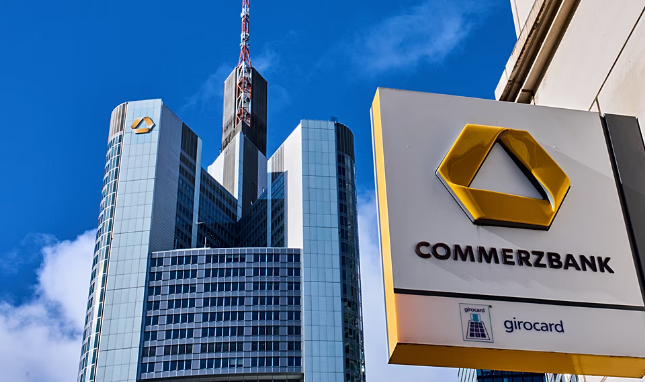
Germany is seeking assurances from Italy’s UniCredit over the future of Commerzbank as the Italian lender moves closer to taking control of its German rival, reducing Berlin’s influence over a deal that could create one of Europe’s largest banking groups.
German Finance Minister Lars Klingbeil met UniCredit Chief Executive Andrea Orcel on Monday to discuss the proposed transaction and seek commitments on Commerzbank’s future.
“It is of paramount importance to the federal government that Commerzbank can continue to fulfil its vital role in financing the German economy,” Klingbeil said in a statement following the meeting.
“We expect Commerzbank to remain a listed company headquartered in Frankfurt and to continue its strong focus on financing small- and medium-sized businesses,” he added.
UniCredit has built a stake of nearly 50 per cent in Commerzbank despite strong opposition from the German government and the bank’s management. The Italian lender is now approaching a position that could give it effective control of the German institution.
A German Finance Ministry spokesman said earlier that the two banks had entered “a different phase now” and were negotiating a potential transaction. He said Klingbeil’s priority was to protect the interests of Commerzbank and Germany during the discussions.
“Commerzbank has over 40,000 employees and we naturally want to safeguard their interests,” the spokesman told reporters.
Berlin retains some influence through its approximately 12 per cent holding in Commerzbank and representation on the bank’s supervisory board. Both positions date from the German state’s rescue of the lender during the global financial crisis.
However, the government’s ability to prevent or significantly influence a takeover is expected to weaken as UniCredit increases its ownership.
UniCredit began building its position in Commerzbank in 2024 as it sought to pursue a takeover. Commerzbank responded by cutting thousands of jobs and raising its financial targets in an effort to persuade shareholders that remaining independent would deliver greater value.
Those efforts failed to stop UniCredit’s advance. In late July, Commerzbank Chief Executive Bettina Orlopp called for “constructive” discussions with the Italian bank as UniCredit moved closer to a controlling stake.
UniCredit has argued that combining the two banks would create a stronger European financial institution capable of competing more effectively with large US banking groups. The Italian lender has also said a merger could help address fragmentation in Europe’s banking sector.
The proposed takeover has generated significant political opposition in Germany, where Commerzbank is regarded as an important lender to businesses, particularly small and medium-sized companies.
Some policymakers in Brussels and officials at the European Central Bank have taken a more supportive position on potential consolidation within Europe’s banking sector.
The talks between Berlin and UniCredit now focus on the future structure and role of Commerzbank, including its Frankfurt headquarters, workforce and support for German businesses, as the Italian lender moves closer to completing one of Europe’s most closely watched banking deals.
