


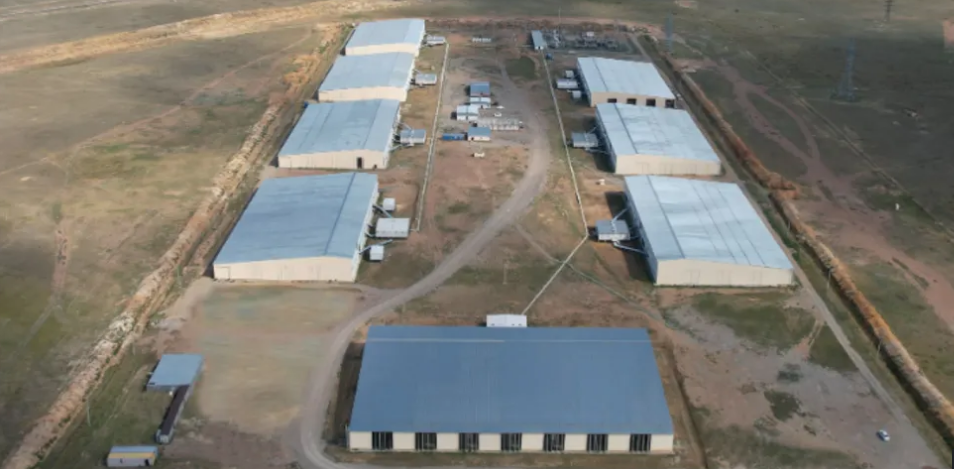
Companies that built huge data centres to mine Bitcoin are increasingly redirecting their computing infrastructure towards artificial intelligence, as weaker cryptocurrency returns encourage miners to seek more stable sources of income.
Bitcoin mining firms invested heavily in warehouses packed with powerful computers during the cryptocurrency boom. These machines process transactions on the Bitcoin network and receive newly created coins as rewards.
The economics of mining have become more difficult, however. Bitcoin reached about $124,000 in October 2025 before falling sharply. Although the cryptocurrency has recovered to around $80,000 and gained almost 30% so far in August, some mining companies are increasingly convinced that artificial intelligence offers better long-term prospects.
AI companies require enormous amounts of computing power and data-centre capacity, creating an opportunity for Bitcoin miners that already control large sites and have access to substantial electricity supplies.
Companies including TerraWulf, Ionic Digital, Core Scientific, Iris Energy, Bitdeer, Riot Platforms and Hut 8 are redirecting investment towards AI and high-performance computing.
Riot Platforms recently signed a $9 billion, 20-year computing agreement with Anthropic, reflecting the growing demand for infrastructure capable of supporting AI workloads.
Some companies have also changed their corporate identities to reflect the new direction. Applied Blockchain has changed its name to Applied Digital, while TerraWulf has shifted its description from a Bitcoin mining business to one focused on AI and high-performance computing.
Enegix, which attracted attention after opening a large Bitcoin mining facility in Kazakhstan in 2020, is also preparing to convert a significant part of its infrastructure for AI use.
Chief executive Yerbolsyn Sarsenov said the company was working towards using its energy and infrastructure capabilities for artificial intelligence development in Kazakhstan and other locations.
The transition, however, is costly. Some miners have had to sell Bitcoin holdings to help finance the conversion of their facilities. AI operations can require different hardware and cooling systems, meaning existing mining centres cannot always be converted without major investment.
Wolfie Zhao of The Energy Mag, formerly known as The Miner Mag, expects the shift to continue even if Bitcoin prices remain strong. He said many major public miners were likely to reduce their use of Bitcoin mining equipment in the coming quarters.
Zhao also warned that companies committing large facilities to AI could find it difficult to return to cryptocurrency mining. Long-term agreements to provide computing capacity to AI customers can guarantee revenue for years, making a return to Bitcoin less attractive.
Bitdeer, which describes itself as the world’s largest Bitcoin miner, recently announced a 16-year computing agreement with Anthropic.
Despite the shift, Bitdeer plans to continue mining Bitcoin. Chief strategy officer Haris Basit said miners could ultimately adopt a dual-use model, combining cryptocurrency mining with AI computing.
He said Bitcoin mining remains useful because it can be interrupted when necessary, while AI contracts can provide longer-term and more predictable revenue.
