


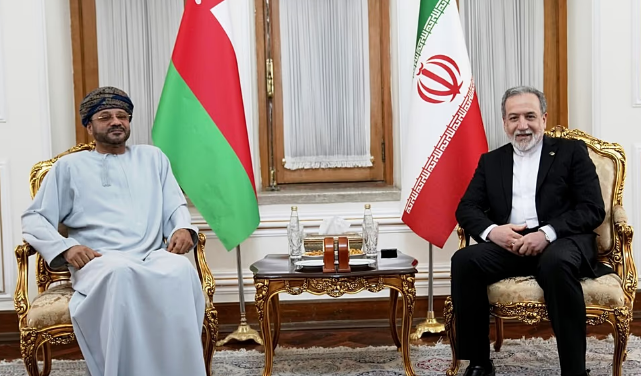
Iran and Oman have agreed to work on a phased plan for managing maritime traffic through the Strait of Hormuz, including a temporary navigation corridor and a joint effort to clear mines from the strategically important waterway.
The agreement followed talks in Tehran on Tuesday between Omani Foreign Minister Badr Albusaidi and his Iranian counterpart Abbas Araghchi. The discussions focused on restoring controlled shipping through the strait, which has remained effectively closed since the war in Iran began in February.
A joint statement said the two countries had discussed a phased framework that could provide a practical basis for managing maritime traffic.
The initial proposal includes a “joint temporary navigational corridor” through the strait, alongside a mine-clearing operation designed to improve safety for vessels using the route.
Further negotiations are expected to address the creation of a permanent shipping corridor and determine how the Strait of Hormuz would be administered. The talks will also consider systems for sharing information, managing vessel movements and providing navigation and security services.
Albusaidi said he was hopeful that Iran and Oman would soon be able to announce a temporary corridor. He added that the two sides would continue working towards a permanent arrangement and an agreement on responsibility for administering the waterway.
Iranian Deputy Foreign Minister Kazem Gharibabadi said the proposed temporary route for ships entering the Persian Gulf from the Gulf of Oman would run entirely through Iranian waters. Vessels leaving the Gulf would use a route passing through both Iranian and Omani waters.
Gharibabadi said additional negotiations would take place over the next 30 to 60 days.
The Strait of Hormuz is one of the world’s most important maritime trade routes, carrying a significant share of global energy shipments. Any prolonged disruption has raised concerns about fuel supplies, shipping costs and international trade.
The talks come amid heightened tensions between Tehran and Washington. US President Donald Trump warned Oman last week against obstructing discussions between the United States and Iran over the strait.
Trump also threatened military action against Oman in comments to Fox News as a June agreement between Washington and Tehran expired.
It remains unclear whether the Trump administration will support the arrangement reached between Iran and Oman.
Iranian President Masoud Pezeshkian and other senior officials also discussed the future of the strait with a Pakistani delegation that visited Tehran on Tuesday. Pakistan’s military said its delegation had held talks aimed at reviving negotiations to end the conflict in Iran.
The latest Iran-Oman discussions could provide a basis for gradually reopening the waterway, although a permanent system will depend on further negotiations between the countries and wider regional developments.
