


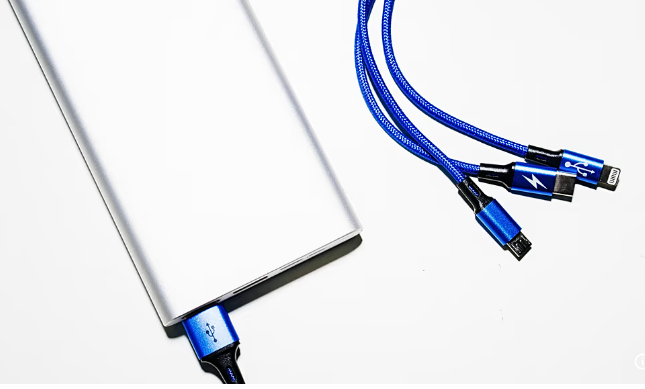
Aviation authorities are urging passengers to keep power banks, vapes and other lithium battery-powered devices out of checked luggage after a sharp increase in battery-related incidents raised safety concerns across the airline industry.
The warning comes as millions of travelers head overseas during the busy summer holiday season, prompting regulators and airlines to reinforce rules aimed at reducing the risk of fires caused by lithium batteries.
The British Civil Aviation Authority (CAA) said lithium batteries now represent the biggest safety risk facing aircraft. Officials reported that the number of battery-powered devices discovered in checked baggage has nearly doubled over the past year, while the average passenger now carries around four lithium-powered devices on every flight.
Lithium batteries are widely used in portable electronics because they store large amounts of energy in compact devices. However, damaged or defective batteries can overheat and ignite, creating fires that are difficult to extinguish. Authorities warn that incidents occurring inside the aircraft cabin can usually be managed by trained crew, but fires in the cargo hold present a much greater danger.
According to the CAA, the UK recorded 316 incidents involving lithium battery-powered devices in checked baggage during 2024. That figure climbed to 643 in 2025, with aviation officials reporting an average of two battery-related incidents every week. Such events can also lead to flight delays or diversions when luggage must be removed before departure.
Recent incidents have highlighted the risks. In May, an easyJet flight traveling from Hurghada, Egypt, to London diverted to Rome after a passenger informed the crew that a portable charger had been packed in checked luggage. Last October, footage circulated online showing flames emerging from an overhead storage compartment on an Air China flight, with reports suggesting a lithium battery was responsible.
The International Civil Aviation Organisation (ICAO) updated its guidance in March, recommending passengers carry no more than two power banks and avoid charging them during flights, whether through onboard power outlets or other methods. The CAA has repeated those recommendations and said many passengers remain unaware of the regulations.
Travelers are also advised to completely switch off laptops before placing them in checked baggage.
Tim Alderslade, chief executive of Airlines UK, described lithium battery incidents as an increasing challenge for the aviation sector.
“Whilst pilots and cabin crew are trained to deal with any situation the best outcome is always prevention, which starts when passengers pack their bags,” he said.
Airlines around the world have introduced stricter rules in response. Carriers including Qantas, Emirates, Cathay Pacific and Singapore Airlines have banned the use of power banks during flights or prohibited charging them onboard. Lufthansa Group, which includes Lufthansa, Austrian Airlines, Eurowings and SWISS, has also tightened its policies by limiting the number of power banks passengers may carry and requiring them to be kept on their person or in easily accessible locations during the flight. Türkiye also introduced updated regulations earlier this year following ICAO’s revised guidance.
