


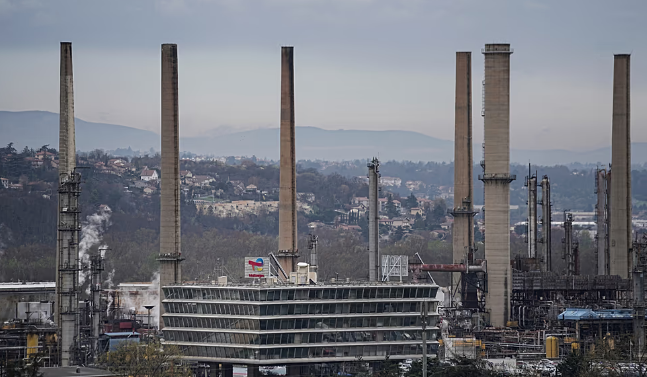
Major European oil and gas companies are facing renewed political pressure for higher windfall taxes after reporting strong first-quarter profits driven by soaring energy prices during the conflict in the Middle East.
Energy markets were shaken earlier this year after fighting involving Iran disrupted shipping through the Strait of Hormuz, one of the world’s most important oil transit routes. The turmoil pushed global crude prices sharply higher and boosted earnings for some of Europe’s largest energy firms.
Shell reported a 24% rise in first-quarter profit on Thursday, while BP also posted higher earnings last month. French energy giant TotalEnergies said its net profit jumped 51% to $5.8 billion during the same period.
Analysts expect strong earnings to continue through the year as energy markets remain volatile.
According to advocacy group Oxfam, six of the world’s biggest fossil fuel companies — Chevron, Shell, BP, ConocoPhillips, ExxonMobil and TotalEnergies — are projected to earn an additional $37 million per day in 2026 compared with the previous year.
Oil prices surged during the conflict, with Brent crude climbing from roughly $70 per barrel before fighting erupted in late February to more than $126 at its peak. Prices later eased but remained elevated around the $100 mark during much of the quarter.
Analysts said European companies with major trading operations gained not only from higher prices but also from the extreme swings in the market.
“BP, Shell and Total benefited not only from higher oil prices, but also from the market turbulence itself,” said Stephen Innes of SPI Asset Management.
The strong results have revived calls across Europe for new taxes on excess profits in the energy sector, similar to measures introduced after Russia’s invasion of Ukraine in 2022.
Germany, Austria, Spain, Italy and Portugal jointly urged the European Commission earlier this year to consider an EU-wide levy on extraordinary profits earned during the Iran-related oil shock. The countries argued that additional tax revenue could help governments fund consumer support programs and reduce inflation pressures.
Environmental groups have also intensified criticism of the industry. Friends of the Earth accused fossil fuel companies of profiting from global instability while households faced rising energy costs.
In Britain, the debate has focused on the existing Energy Profits Levy applied to North Sea oil and gas producers. UK Energy Minister Ed Miliband criticized what he described as “excessive profits” and faced calls to increase the tax further.
The profit boom has also reignited debate over Europe’s long-term energy strategy. While companies continue investing in oil and gas projects, governments are again highlighting renewable energy as a way to reduce dependence on volatile fossil fuel markets and improve energy security.
