


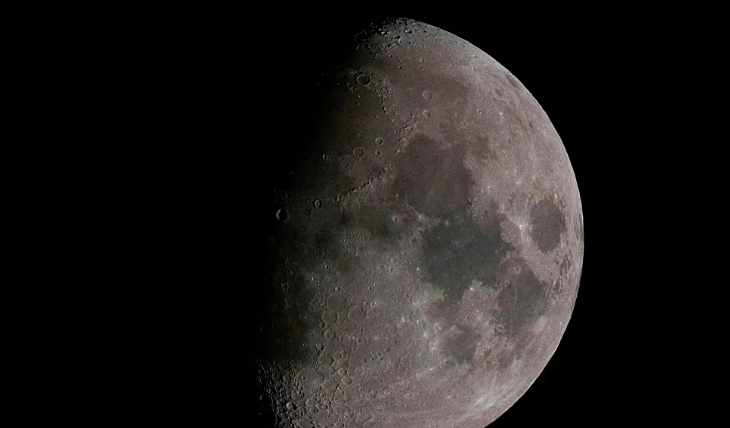
President Donald Trump had told the agency it has until 2030 to build a permanent lunar base, and NASA is now accelerating efforts to meet that goal. At the agency’s “Ignition” event, officials outlined plans to return humans to the Moon, establish a permanent base, and expand scientific missions to maintain the United States’ lead in space exploration.
“The clock is running in this great‑power competition, and success or failure will be measured in months, not years,” said NASA Administrator Jared Isaacman. The agency said its new strategy aligns with the US National Space Policy, released last December, which calls for returning astronauts to the Moon, strengthening commercial space operations, and leading the world in space exploration.
NASA announced a phased approach for the Moon base. The first missions will send rovers, instruments, and technology to the lunar surface to study power generation, communications, and navigation. Later phases will involve building partially habitable structures and establishing regular deliveries, including collaboration with Japan’s Aerospace Exploration Agency (JAXA) using their pressurized rover for logistics.
The final phase will see larger equipment shipments and human missions, supporting a continuous presence on the Moon rather than short-term visits. NASA has already signed partnerships with Italy and Canada and plans additional contributions for habitation, surface mobility, and logistics. An executive order directs NASA to complete the permanent lunar outpost by 2030, which will also serve as a platform for future Mars missions.
To focus on the Moon base, NASA is pausing plans for the Gateway space station, initially scheduled for 2027 as a staging point for astronauts and cargo. Artemis III, originally a Moon landing mission, will now test spacecraft systems in Earth orbit, with Artemis IV in 2028 aiming to land humans on the lunar surface. After Artemis III, NASA plans lunar missions every six months and at least one landing per year.
Beyond lunar missions, NASA will launch the first nuclear-powered interplanetary spacecraft, “Space Reactor-1 Freedom,” to Mars before 2028 ends. The craft will test nuclear electric propulsion for deep space travel and release the Skyfall payload, a group of small helicopters to explore Mars’ surface.
NASA also announced several scientific missions. The Nancy Grace Roman Space Telescope will study dark energy to better understand the universe’s expansion. Dragonfly, set for launch in 2028, will send a nuclear-powered octocopter to Titan, Saturn’s largest moon, arriving in 2034 to explore its organic-rich surface. The Rosalind Franklin Rover, built by the European Space Agency, will launch to Mars in 2028 to detect and analyze organic molecules.
Additionally, a new Earth science mission launching next year will track convective storms to improve forecasts of extreme weather events up to six hours in advance.
NASA’s updated strategy signals a major push to secure a continuous human presence on the Moon while advancing scientific knowledge across the solar system.
